Kennedy Promises Breakthrough on Autism Causes - But Amidst Public Health Shakeup, Advocates Express Concern
CNN International•
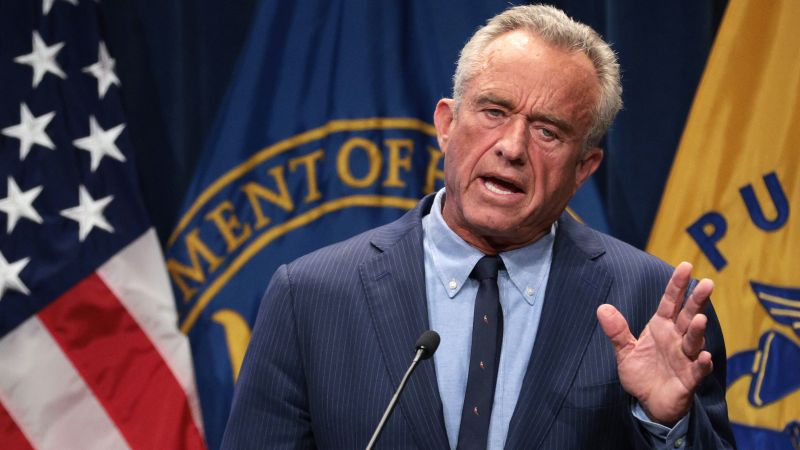
Breaking News: Robert F. Kennedy Jr., the U.S. Health and Human Services Secretary, has made a bold claim: definitive answers regarding the causes of autism will be revealed this month. This announcement, initially made in April, has generated both excitement and apprehension within the autism community, particularly given the recent turbulent changes within public health agencies.
Kennedy's pledge has been met with a backdrop of significant upheaval. Since his initial statement, he has initiated a series of personnel changes, removing key public health officials. Furthermore, he has publicly questioned and challenged long-standing scientific studies that have consistently found no causal link between vaccines and autism, a controversial stance that has drawn criticism from medical experts and sparked renewed debate.
A History of Controversy: Kennedy's views on autism and vaccines have been a source of contention. He has previously expressed skepticism about the safety of vaccines and suggested potential links to autism, positions that contradict the overwhelming consensus of the scientific and medical community. These views have raised concerns about the potential impact on public health policies and vaccination rates.
The Autism Community's Response: Autism advocacy groups have reacted with a mix of cautious optimism and deep concern. While any progress towards understanding the complex causes of autism is welcomed, the timing of Kennedy's announcement, coupled with the ongoing changes within public health agencies, has fueled anxieties. Many fear that the pursuit of answers may be influenced by a pre-determined agenda or politicized by personal beliefs, potentially undermining the integrity of the scientific process.
What are the Potential Causes of Autism? Autism Spectrum Disorder (ASD) is a complex neurodevelopmental condition with a wide range of presentations. Research suggests that a combination of genetic and environmental factors likely contribute to its development. These factors could include:
- Genetic Predisposition: Studies have identified numerous genes that may increase the risk of autism, although no single gene is responsible.
- Environmental Factors: Research is ongoing to investigate potential environmental triggers, such as exposure to certain toxins during pregnancy or early childhood.
- Brain Development: Differences in brain structure and function are observed in individuals with autism.
The Road Ahead: Kennedy's promise of answers this month has placed considerable pressure on researchers and public health officials. It remains to be seen what information will be revealed and how it will be received by the scientific community and the public. Regardless of the findings, it is crucial that any conclusions are based on rigorous scientific evidence and are communicated transparently to ensure public trust and informed decision-making.
Stay tuned for updates as this story develops. We will continue to provide comprehensive coverage of this evolving situation and its potential impact on the autism community and public health.